
How to get rid of a musty smell in your wardrobe (for good)

Updated:
Why does my wardrobe smell musty?
A wardrobe smells musty because the air inside holds more water than the furniture can release, and mould and bacteria grow on it and give off that stale smell. The cause is almost always one of these five:
- Condensation on a cold outside wall. Warm bedroom air gets into the wardrobe, meets the back wall and leaves water. With a room at 20 °C and 60 % humidity, water condenses on any surface colder than about 12 °C.
- No airflow. Doors always shut, clothes pressed against the back, the unit flush with the wall: the air stands still and the moisture stays.
- Things put away damp. Clothes that felt dry, towels, coats back from the rain, shoes. Each item releases its water inside the wardrobe.
- Leaks. A pipe, the roof, the façade or the neighbour's bathroom wets the wall or the floor of the wardrobe.
- Mould already there. If it grew once, the smell returns whenever the humidity rises, even with no visible stains.
Uruguayan winters make it worse: according to INUMET, mean relative humidity from June to August is about 80 % nationwide and the mean temperature about 12 °C (1971–2000 reference period). Outside walls are cold exactly when the air carries the most water.
How to find where the moisture comes from
A hygrometer is the fastest way to tell whether the wardrobe has a humidity problem. It is an inexpensive relative humidity meter; leave it 24 hours inside the closed wardrobe, then 24 hours in the room.
- Under 60 % inside: humidity is not the main problem; look for a garment or shoe causing the smell.
- Over 60 % inside and similar in the room: lower the humidity of the whole room, not just the wardrobe.
- Clearly higher inside than outside: the wardrobe has its own source, usually the back wall or something stored damp.
To tell condensation from a leak, tape a roughly 30 cm square of aluminium foil to the back wall and check it two days later. Droplets on the outer face mean condensation; moisture on the face against the wall means the water is coming through the wall.

| What you notice | Likely cause | What to do |
|---|---|---|
| The smell fades with the doors left open | Poor ventilation | Air it, loosen the clothes, add an absorber |
| Stronger smell at the back, wall cold to the touch | Condensation on an outside wall | Move the unit off the wall, lower room humidity |
| Black or green dots low down, in the corners | Mould from condensation | Clean the mould and fix the humidity |
| A stain that grows after rain | Façade or roof leak | Call a professional |
| Wet wall or floor without rain | Leaking pipe | Shut off that water line and call a plumber |
| Only some clothes smell | Clothes stored damp | Rewash and dry fully before storing |
How to remove the musty smell from a wardrobe today
The smell goes when its cause goes: take the clothes out, clean the wardrobe and dry it, rather than masking it with fragrance. It takes an afternoon plus drying time:
- Empty the whole wardrobe and separate the clothes that smell from those that do not.
- Wash the ones that smell. Use hot water if the label allows; half a cup of white vinegar in the rinse helps with the odour.
- Dry them completely, in the sun if possible. A slightly damp garment smells again a few days after it is put away.
- Wipe shelves, walls, floor and the back of the unit with a cloth and white vinegar. Dry with a clean cloth.
- Leave the wardrobe open for 24 hours with the window open or a fan pointing inside.
- Put back only what is dry, without pressing clothes against the back, and add a moisture absorber.
Never mix bleach with vinegar or other cleaners: the mixture releases toxic gases. Health Canada warns against combining bleach with any other product.
If there is mould: how to clean it safely
Mould is cleaned with water and detergent, dried thoroughly, and the humidity that caused it is fixed; otherwise it comes back. That is the advice of the US Environmental Protection Agency, which also advises against routine use of bleach.
- Air the room and wear gloves and a mask while you clean.
- On smooth surfaces (melamine, paint, sealed wood) scrub with water and detergent or white vinegar, then dry straight away.
- Swollen chipboard, cork or mouldy cardboard will not recover: porous materials with mould sometimes have to be replaced.
- Clothes with a smell or light marks recover with a normal wash and thorough drying; old stains on delicate fabrics may stay.
If the mouldy area is larger than 1 m², comes back after cleaning, or someone at home has asthma or allergies, call a professional. According to the CDC, mould can cause a stuffy nose, sore throat, coughing, burning eyes or a skin rash in some people.
Which moisture absorber to choose for a wardrobe
Silica gel is the most practical absorber for a closed wardrobe: it stays dry, shows when it is saturated and can be reused. Calcium chloride takes up more water but turns to liquid. Baking soda and charcoal remove smells, not moisture.
| Absorber | What it does | How much water it holds | Reusable | Watch out |
|---|---|---|---|---|
| Silica gel | Adsorbs water vapour and stays dry | Up to 40 % of its weight | Yes, dried in the oven | Do not heat the plastic container |
| Calcium chloride | Absorbs water and dissolves in it | Up to 360 % of its weight at 80 % humidity (manufacturer figure) | No | The brine stains and corrodes; keep from children and pets |
| Activated charcoal | Traps odour molecules | Little as a desiccant | Partly, in the sun | Stains if the bag tears |
| Baking soda | Neutralises odours | Not designed to absorb water | No | Cakes in damp air |
| Rice, chalk, coffee | Absorb a little water or add scent | No reliable data | No | No indicator: you cannot tell when they stop working |
| Electric dehumidifier | Removes water from the whole room's air | Litres per day, depending on the unit | Yes | Electricity use and emptying the tank |

The silica gel figures come from the Ted Pella and AGM data sheets; the calcium chloride figure from the Signode brochure for its absorber based on that salt.
If the hygrometer reads above 60 % across the whole room, no passive absorber will keep up: air the room more or run an electric dehumidifier in it.
Silica gel in a wardrobe: how much and how to reuse it
About 35 g of silica gel holds 8 to 12 g of water: per the AGM data sheet, at least 22 % of its weight at 40 % humidity and 33 % at 80 %. That sounds small, but the air in a 1.5 m³ wardrobe at 20 °C loses about 8 g of water going from 80 to 50 % humidity.
The catch is that wood, chipboard and cotton clothes hold far more water than the air and keep releasing it, and every time you open the door fresh air comes in. So silica gel keeps a healthy wardrobe dry; it does not dry a wall that condenses.
- On the rail, among hanging clothes: a hanging silica gel container for wardrobes.
- On the edge of a shelf or a fabric box: a clip-on container for shelves.
- In drawers and shoe boxes: a round 50 mm container or a corner container that sits in the corner.
- Low down and at the back, where the smell is strongest: that is where the air is coldest and dampest.
Indicating silica gel changes colour when it is saturated. At that point you dry it and it works again:
- Take the beads out of the container. Plastic containers, like our PETG ones, warp in oven heat.
- Spread them in a thin layer on a metal tray, ideally one you do not use for food.
- Oven at 100–120 °C, never above 120 °C, until they return to their original colour. Check every half hour.
- In a microwave, loose beads only, never sachets: low power, short bursts, stirring between bursts.
- Let them cool in a closed jar and refill the container.

If you keep heating once the colour is back, the indicator burns and stops working. Each regeneration costs a little capacity, according to the manufacturer Silica Gel Italia.
Ready-to-use silica gel for your wardrobe
Containers printed in Montevideo with indicating silica gel included. They open at the top to dry or change the beads.
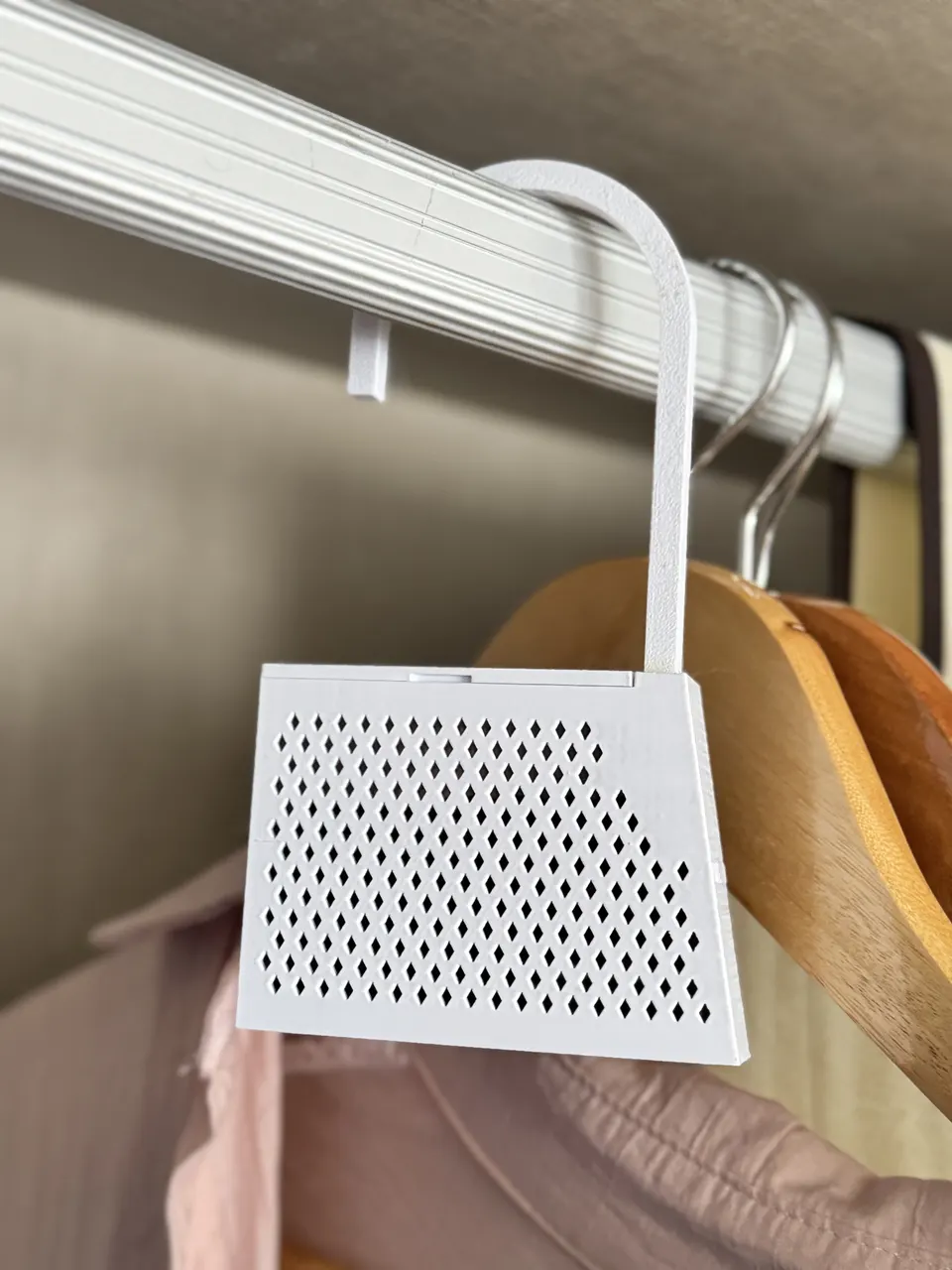
Silica gel container for wardrobes and shelves
Hanging silica gel container for wardrobe rails, indicator silica gel included. Diamond lattice and press-fit lid against closet moisture.
$560View product →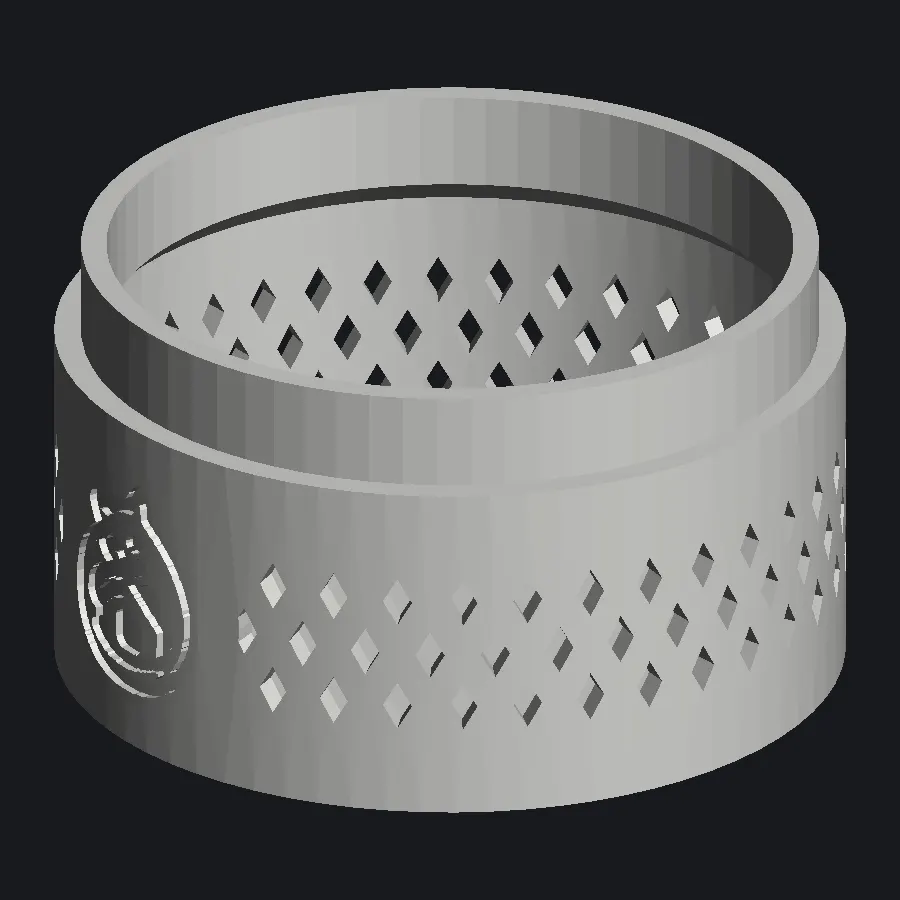
Ø50 mm Silica Gel Container with Indicator Beads
Round Ø50 x 30 mm container with indicator silica gel included. Diamond lattice and press-fit lid for filament dry boxes.
$390View product →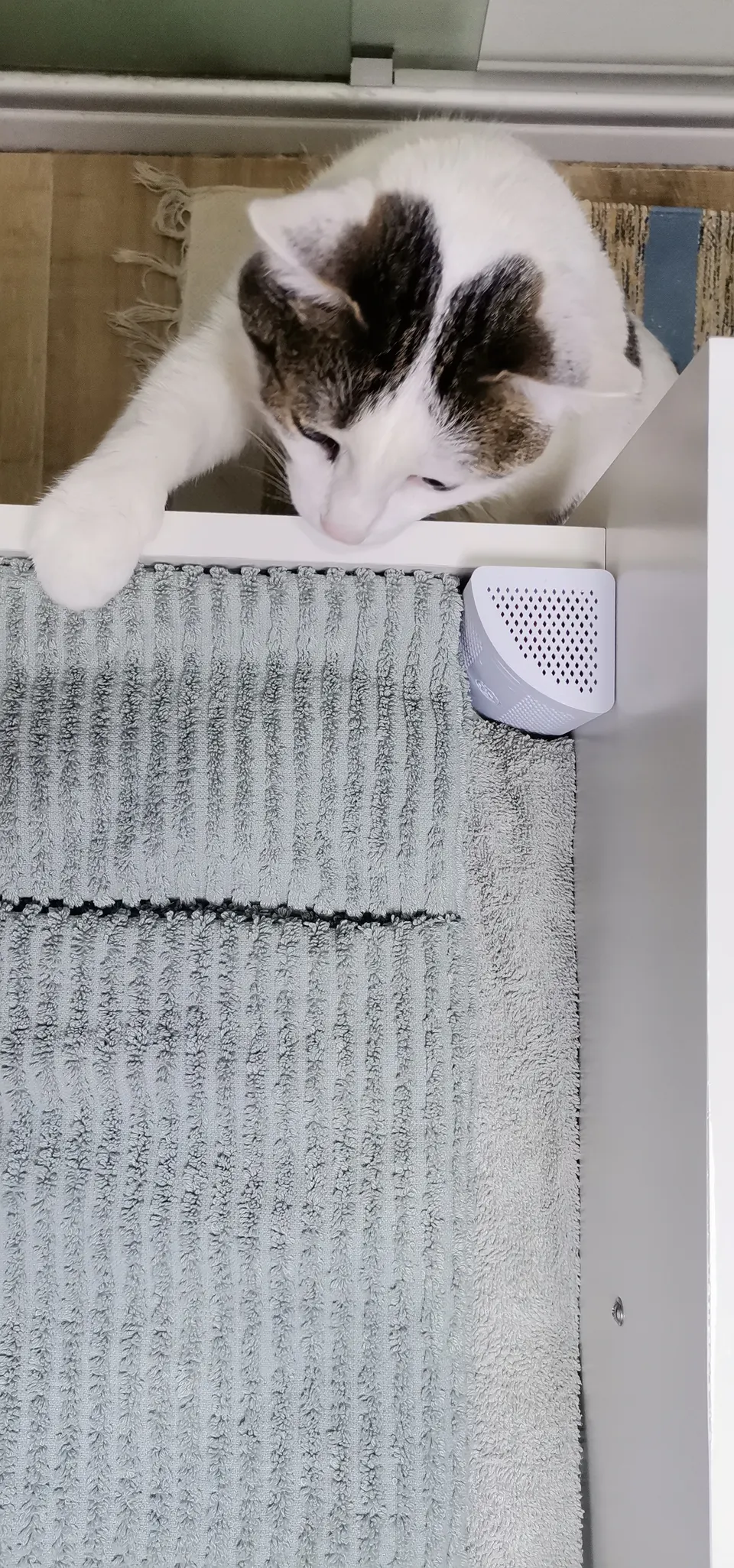
Corner silica gel container
Corner silica gel bead container, 50 x 50 x 50 mm, diamond lattice and press-fit lid. Indicator silica gel included. For filament dry boxes.
from $520View product →
How to keep the musty smell from coming back
To keep the smell away, cut the moisture getting into the wardrobe and let the air move. What works best:
- Keep the unit 5 to 10 cm off an outside wall and do not let hanging clothes touch the back.
- Store only clothes, towels and shoes that are completely dry.
- Do not dry laundry in the bedroom: every wet load releases its water into the room's air.
- Air the room every day, winter included; 10 minutes with the window open renews the air.
- Open the wardrobe doors for a while now and then, especially on dry days.
- Keep a hygrometer inside and aim for 40–60 %. If it goes over 60 %, change or dry the absorber.
- Check the wardrobe in autumn, before the damp season, rather than at the end of winter.
When to call a professional
If the water comes from the building, no home remedy will fix it. Call a professional when:
- the stain grows after rain or the wall feels wet;
- mould covers more than 1 m² or returns a few weeks after cleaning;
- the smell fills the whole room, not just the wardrobe;
- the chipboard of the unit is swollen or falling apart.
For a leaking pipe, a plumber; for façade or roof leaks, a builder or a waterproofing company. Ask them to state in writing whether it is condensation or a leak before you repaint: paint fixes neither.
Frequently asked questions
Why does my wardrobe smell musty if I cannot see mould?
Because mould starts growing before stains appear. If the air inside stays above 60 % humidity for days, there will be a smell even when the walls look clean. Measure with a hygrometer and check the back and the lower corners with a torch.
What humidity is normal inside a wardrobe?
Between 40 and 60 % relative humidity is reasonable. The US Environmental Protection Agency recommends keeping indoor humidity below 60 %, ideally between 30 and 50 %. Above 60 % for weeks, the smell and mould appear.
Does baking soda remove moisture from a wardrobe?
No. Baking soda neutralises odours but is not designed to absorb water. If liquid collects in the tub, the product was calcium chloride. To lower humidity, use silica gel, calcium chloride or a dehumidifier.
Which is better for a wardrobe, silica gel or calcium chloride?
For a wardrobe full of clothes, silica gel: it stays dry, does not drip and is reused after drying in the oven. Calcium chloride absorbs more water but turns into a liquid that stains and corrodes if spilled, and has to be thrown away when saturated.
How often should silica gel be changed?
When it changes colour, if it is the indicating type. In a closed wardrobe it can last weeks; in winter with the door opened often, much less. No need to throw it out: dry it in the oven at 100–120 °C until the colour returns and it works again.
Does rice work against wardrobe humidity?
It absorbs some water, but there is no reliable data on how much and it gives no sign when it is saturated. It can also attract insects. An absorber with an indicator, such as silica gel, shows when it has stopped working.
Do I have to throw away clothes that smell musty?
Rarely. Musty clothes recover with a wash, hot water and white vinegar in the rinse if possible, and full drying in the sun. Only old mould stains on delicate fabrics may not come out.
Does anti-mould paint on the back wall help?
It helps clean up and slows mould coming back, but does not fix the cause. If the wall condenses, move the unit and lower the room humidity; if it leaks, repair the leak. Painting over it without that only hides the problem for a while.
Sources
- INUMET — Winter climate characteristics (mean relative humidity)
- EPA — A Brief Guide to Mold, Moisture and Your Home
- CDC — You Can Control Mold
- Health Canada — Never mix bleach with other cleaning products
- Ted Pella — Desiccants (silica gel capacity)
- AGM Container Controls — Silica gel specifications
- Signode — Hygro-Gel (calcium chloride)
- Silica Gel Italia — How to regenerate silica gel